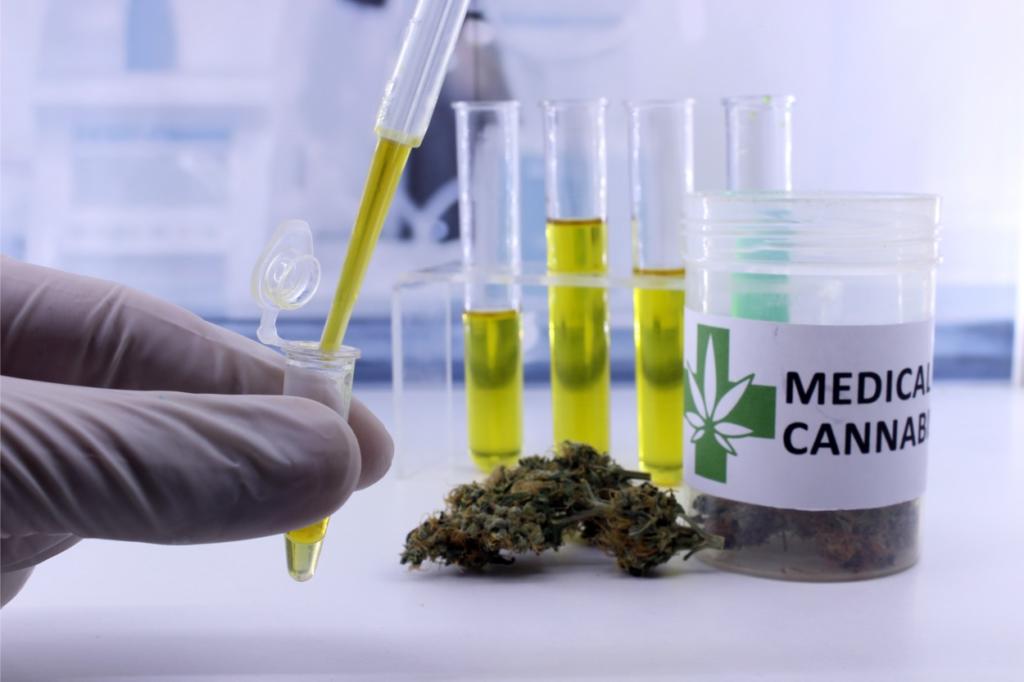
In recent years, the legal cannabis industry has grown in strength globally, after several countries legalized the medicinal, and even recreational use of the substance due to its widespread acceptance in the medical community as a legitimate course of treatment for various diseases.

A trend of strong growth is expected in the coming years, in a market already estimated at around US$165 billion. Most of this growth is expected in Canada, the United States, Europe, and South America.

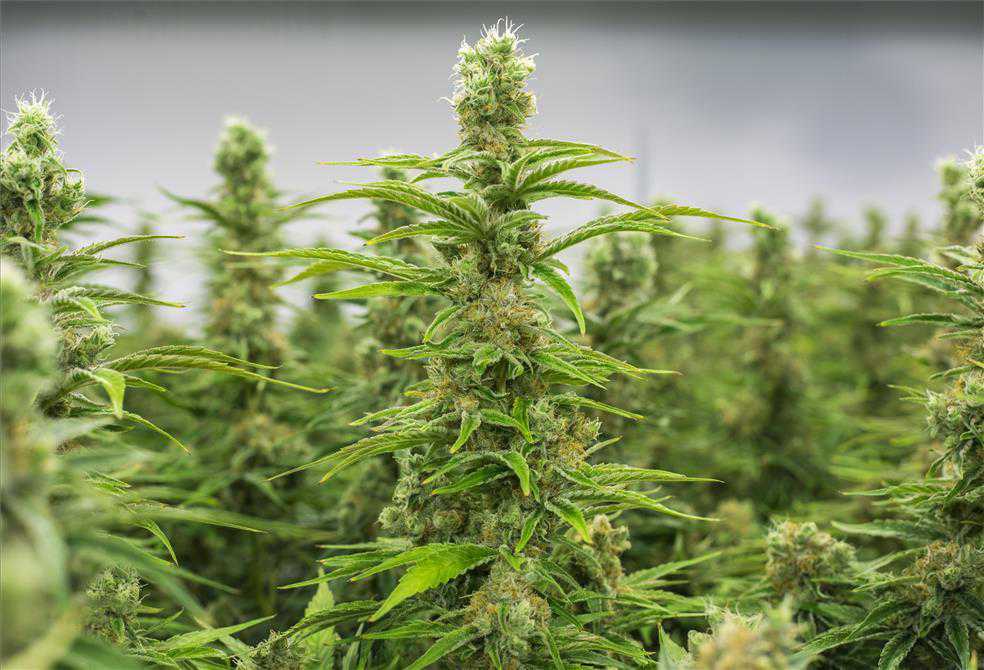
Due to the legalization of its production and consumption, and the subsequent increase in demand, the crop is in strong expansion.

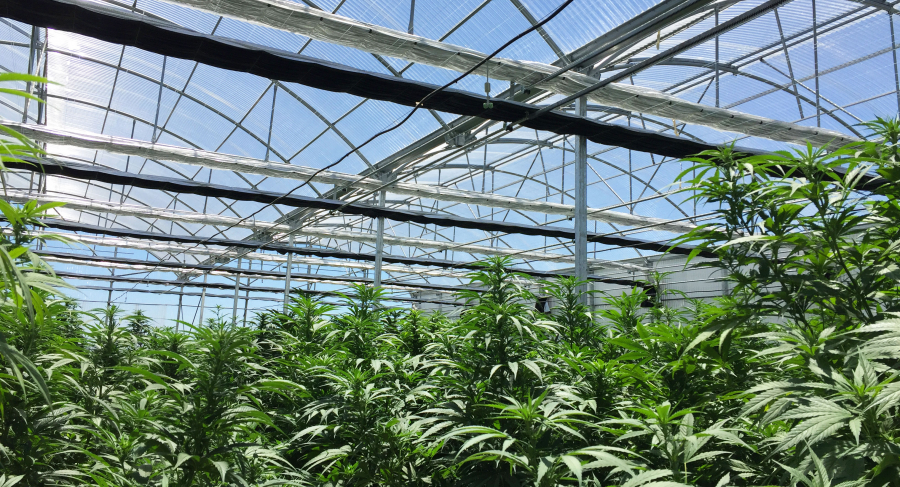
Cannabis cultivation, widespread in many parts of the world, takes place outdoors and in greenhouses.

Indoor cultivation allows accurate control of the multiple variables that affect the optimal cultivation of the cannabis plant.

Greenhouse cultivation allows the combination of various techniques, and therefore, the advantages of both indoor and outdoor cultivation.

Why is relative humidity so importan for the cultivation of medical cannabis?

One of the most important factors in the development of the cannabis plant is moisture control. Correct control of relative humidity affects various aspects of cultivation, such as the assimilation of nutrients, perspiration, and growth.

Incorrect control will result in below-expected growth results or even lead to total crop failure.

Low relative humidity will cause the plant to close its stomata, leading to nutrition problems, and focusing resources on staying hydrated, rather than developing.

Excessively high relative humidity can lead to slow growth, and cause fungi, mould and bacteria to proliferate.

Each of the phases of cannabis cultivation requires a different range of relative humidity, the following values being a reference guide for an optimal crop:

  • Cloning phase: 60-75%
  • Vegetative phase: 40-60%
  • Flowering phase: 40-50%
  • Drying phase: 30-50%
  • The typical temperature range throughout all phases of the crop will vary between 16°C and  30°C.

Depending on the stage of the crop and the production practices of each company, advanced systems are needed that not only control the sensible load or the latent load, but also control both variables effectively, either in parallel or independently.

Mechanical or condensation dehumidification (direct expansion systems or chilled water systems) is very appropriate if the sensible cooling capacity required at certain working points is around or greater than 80% of the total capacity, i.e., where the latent load (humidity) is below 20%.

In condensation drying systems, the cooling coil reduces the air temperature and when it reaches the saturation point it starts condensing, thus extracting the moisture from the air.

On the other hand, when the latent load is around 50% of the total capacity or exceeds this value, i.e. there is a high moisture load, it is necessary to dry in depth.

This high moisture load occurs in most cases due to the transpiration process of the plant, which, although it depends on several factors such as its size, the number of stomata, environmental conditions and management practices, in dense crops under greenhouse transpiration rates increase and can reach up to 4 and 10 liters per square meter of crop per day.

In this instance where it is necessary to dry in depth, the temperature must be reduced below the dew temperature of the treated air. In other words, the air must be supercooled and then reheated to reach the right temperature for good plant development. But this process can be costly as it requires too low a temperature, and there is also the risk that the direct expansion or chilled water coils may freeze when trying to reach colder temperatures.

At this point, the use of adsorption dehumidifiers becomes indispensable.

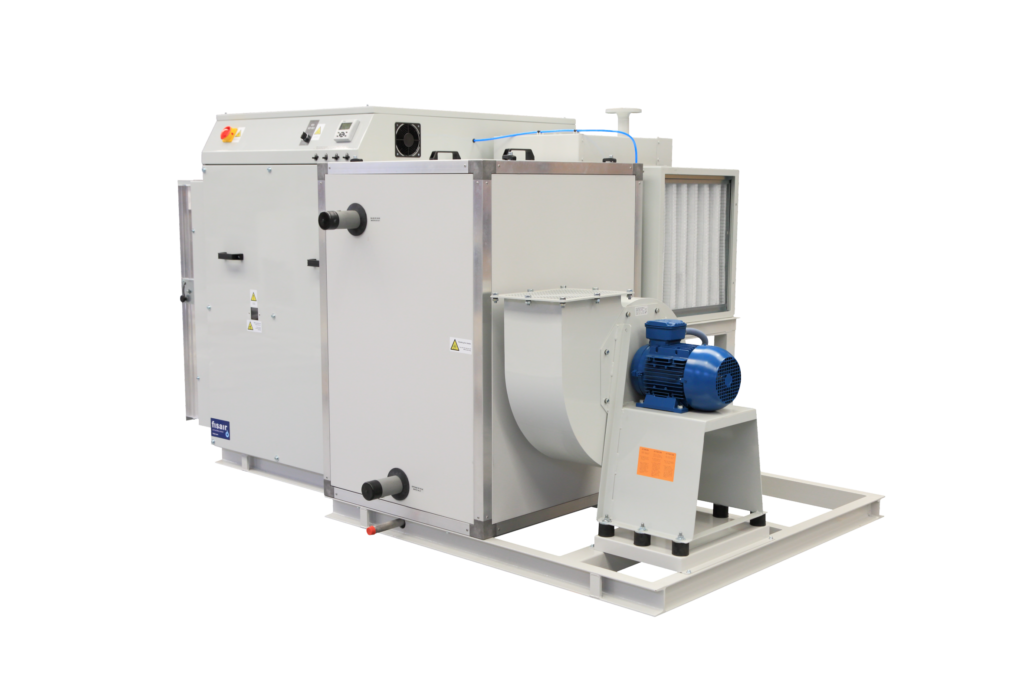
Adsorption dehumidification systems operate on the basis of a high performance, chemically and thermally stable silica gel desiccant rotor. The operation consists of continuously and simultaneously passing two countercurrent air flows through the desiccant rotor. A rotating device and a set of seals around the perimeter of the desiccant rotor ensure a continuous, uniform drying process with optimum performance.

The flow of air to be dried (process air), filtered, passes through the desiccant rotor material (270º), and adsorbs part of the water vapor molecules in the air. This air (dry air) is blown into the humidity-controlled zone by a fan.

The desiccant rotor regeneration air flow (reactivation air), filtered and heated by a battery of electrical resistances, passes through the desiccant rotor material (90º), and adsorbs the water vapor molecules retained in the desiccant rotor, regenerating it for a new drying cycle. This air (wet air) is blown out of the humidity controlled zone by a fan.

Desiccant dehumidification is a very cost-effective and efficient option when used in critical environments where the sensible load is very high and the required relative humidity inside the culture room is less than 45%.

It is also used in drying processes, where in addition to removing a certain amount of water from the flower, the relative humidity and drying temperature must be controlled, a crucial process to preserve its quality, potency and flavor. The ideal temperature for drying cannabis should be in the range of 15-22°C (59-86°F). However, this may vary slightly depending on the environment and specific preferences.

Another great advantage of Fisair desiccant dehumidifiers is that they can incorporate pre-cooling or post-cooling coils by direct expansion or chilled water, which allows to reach not only the relative humidity conditions inside the crop or drying process, but also the temperature requirements.
Fisair: Specialists in Humidifiers and Dehumidifiers for Medical Cannabis Cultivation

Humidifiers / Evaporative Coolers

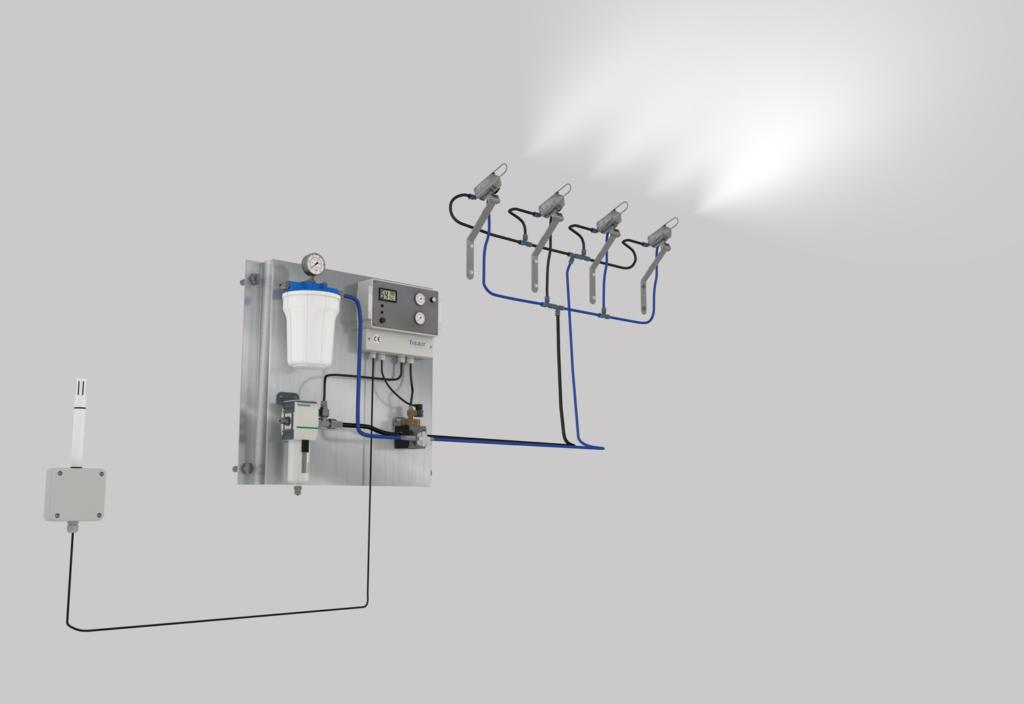
    AtomSpray Series


    • Adiabatic cooling and humidification system.
    • Mist spray gives rapid cooling and humidification of dry air.
    • Reduces costs up to 55% compared to other high-pressure humidifiers.
    • Hygienic – works with closed circuit of water/compressed air.
    • Uses inorganic materials.
    • Low maintenance.

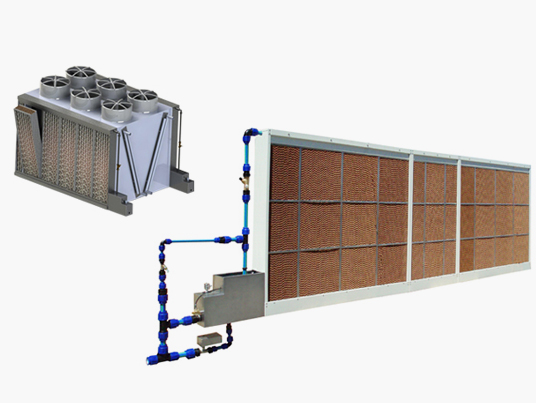
    HEF7 Series


    • Adiabatic cooling and humidification system.
    • Reduction of energy consumption in water cooling of up to 20%.
    • High-efficiency organic or inorganic evaporative panel in stainless steel frame.

Condensation dehumidifiers

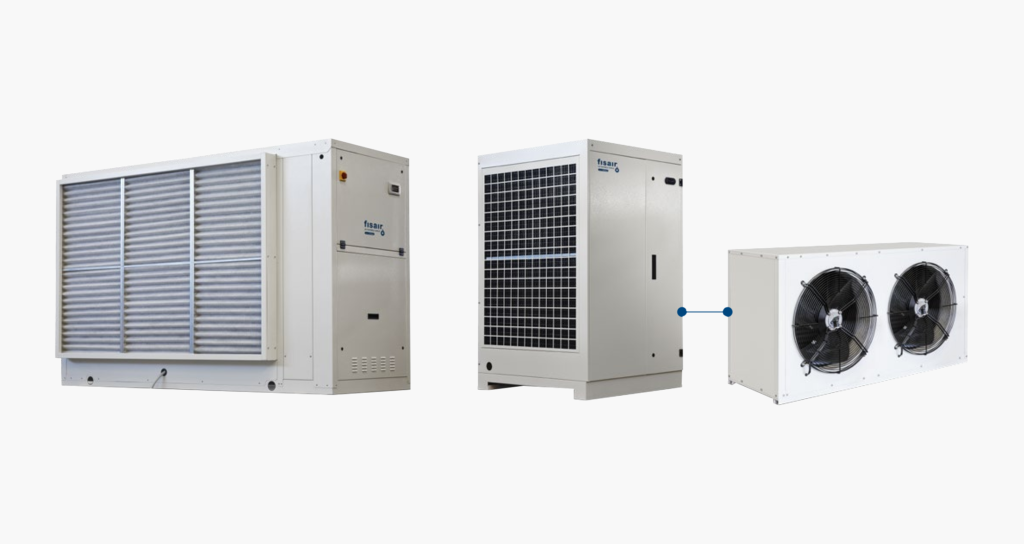
    IT / ST Series


    • Designed for use in high latent load environments.
    • 24-hour operation.
    • Full control of humidity and ambient temperature.
    • External condenser.
    • Suitable for applications where simultaneous control of both parameters is required.

Desiccant Rotor Dehumidifiers

    DFRA Series


    • System based on water vapour retention.
    • High-performance silica gel desiccant rotor.
    • Option of relative humidity control in proportional mode.
    • Temperature control.

Application References

Some outstanding references:

  • Khiron Life Sciences Corp

Related products

Our locations

USA & CANADA

Email: fisair.usa@fisair.com
Phone: +1 (301) 788 4934

UK & IRELAND

Email: fisair.ukie@fisair.com
Phone: +353 (0) 83 469 6219

MÉXICO

Email: fisair.mexico@fisair.com
Phone: +52 221 120 5406

SPAIN & PORTUGAL

Email: fisair.iberica@fisair.com
Phone: +34 91 723 38 40

GERMANY

Email: fisair.deutschland@fisair.com
Phone: +49 6081 9665324

FRANCE

Email: fisair.france@fisair.com
Phone: +33 (0)781 013 175

SOUTH AMERICA

Email: fisair.southamerica@fisair.com
Phone: +54 911 6366 0012

OTHER REGIONS

Email: fisair.global@fisair.com
Phone: +34 917 23 3840

Fisair
Privacy Overview

This website uses cookies so that we can provide you with the best user experience possible. Cookie information is stored in your browser and performs functions such as recognising you when you return to our website and helping our team to understand which sections of the website you find most interesting and useful.