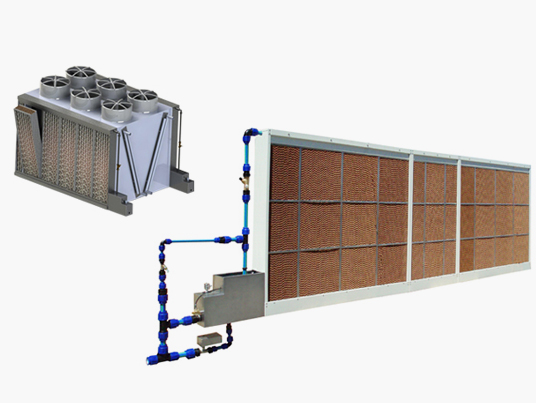
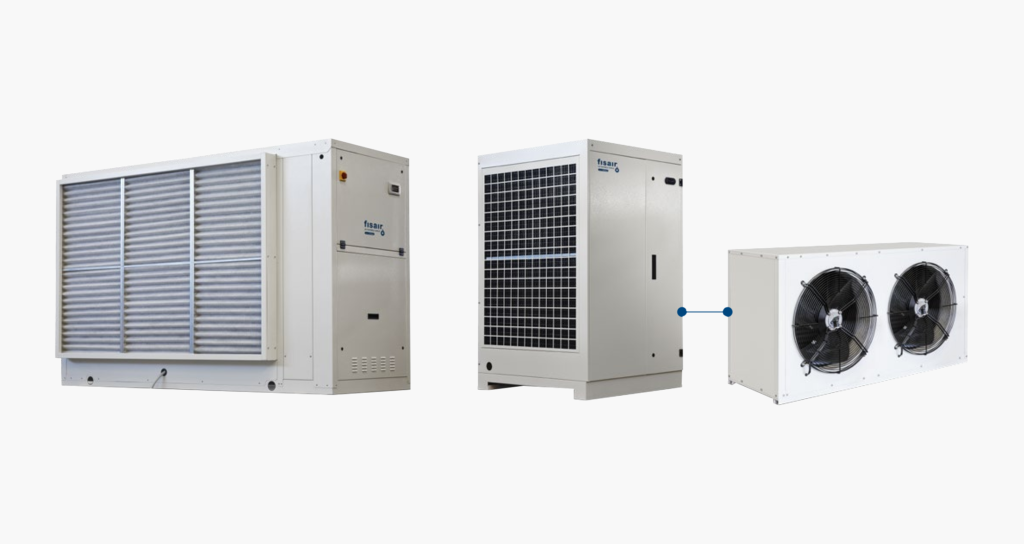
Depending on the stage of the crop and the production practices of each company, advanced systems are needed that not only control the sensible load or the latent load, but also control both variables effectively, either in parallel or independently.
Mechanical or condensation dehumidification (direct expansion systems or chilled water systems) is very appropriate if the sensible cooling capacity required at certain working points is around or greater than 80% of the total capacity, i.e., where the latent load (humidity) is below 20%.
In condensation drying systems, the cooling coil reduces the air temperature and when it reaches the saturation point it starts condensing, thus extracting the moisture from the air.
On the other hand, when the latent load is around 50% of the total capacity or exceeds this value, i.e. there is a high moisture load, it is necessary to dry in depth.
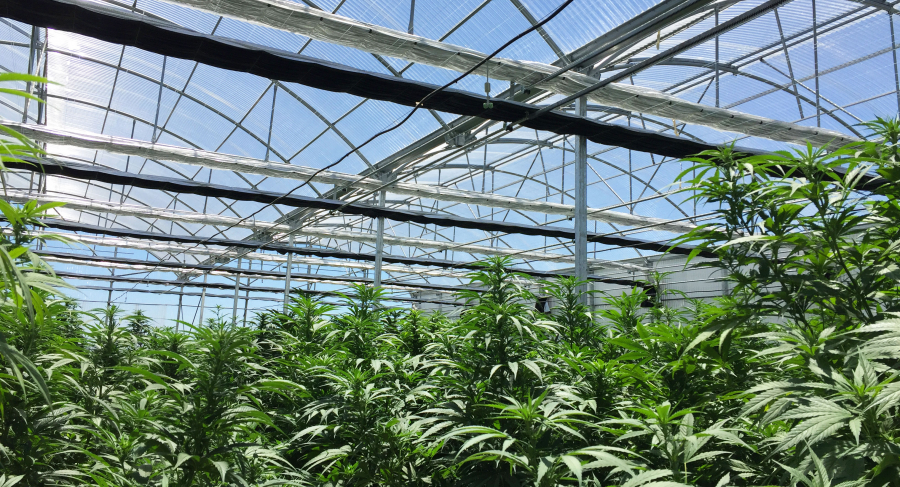
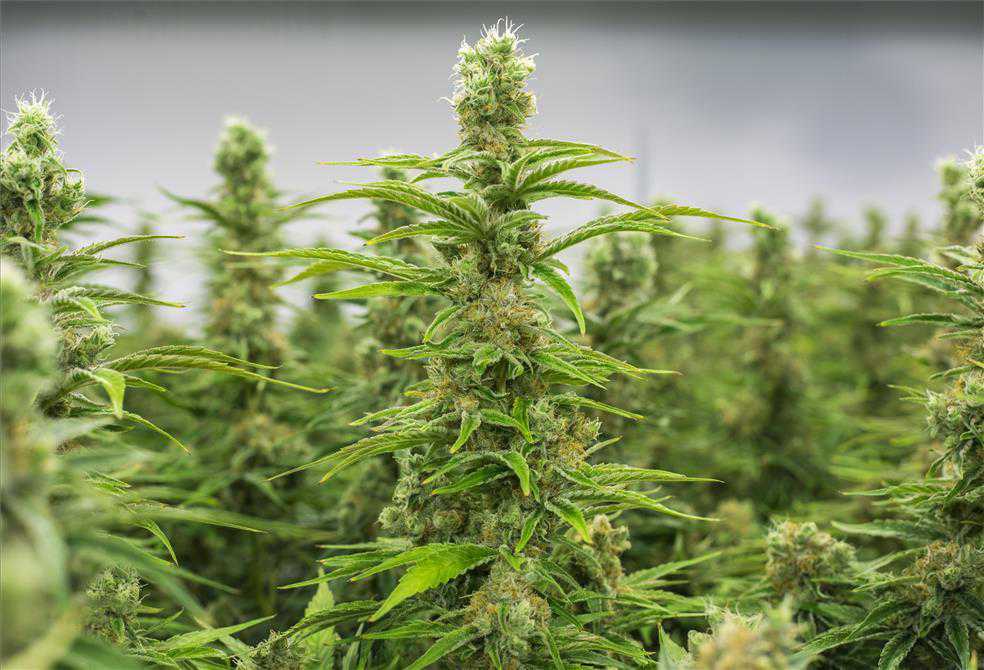
This high moisture load occurs in most cases due to the transpiration process of the plant, which, although it depends on several factors such as its size, the number of stomata, environmental conditions and management practices, in dense crops under greenhouse transpiration rates increase and can reach up to 4 and 10 liters per square meter of crop per day.
In this instance where it is necessary to dry in depth, the temperature must be reduced below the dew temperature of the treated air. In other words, the air must be supercooled and then reheated to reach the right temperature for good plant development. But this process can be costly as it requires too low a temperature, and there is also the risk that the direct expansion or chilled water coils may freeze when trying to reach colder temperatures.
At this point, the use of adsorption dehumidifiers becomes indispensable.
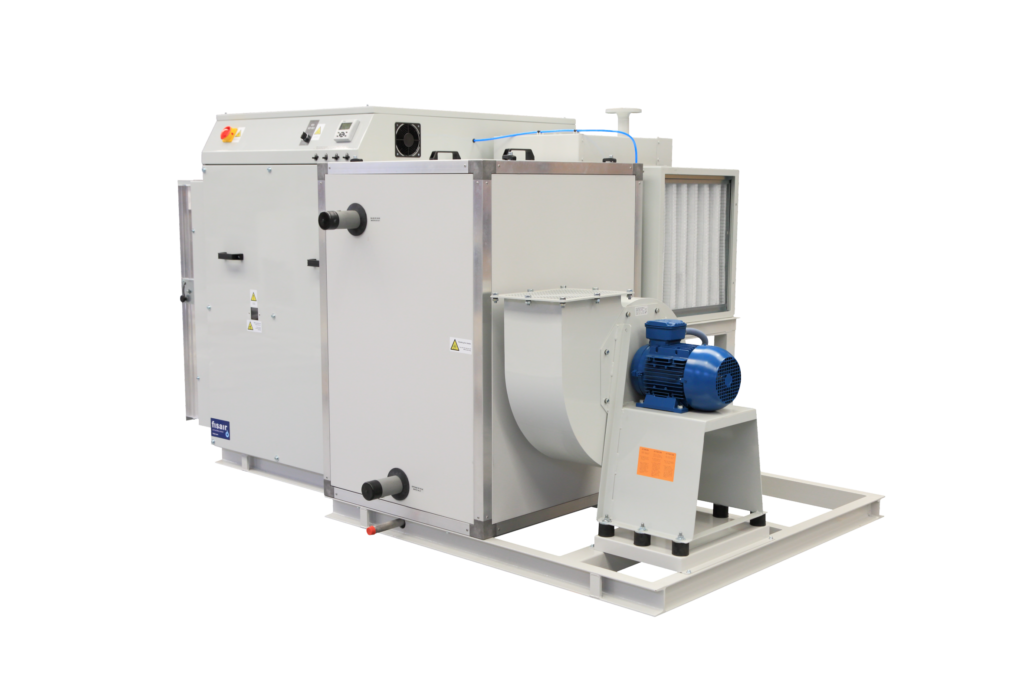
Adsorption dehumidification systems operate on the basis of a high performance, chemically and thermally stable silica gel desiccant rotor. The operation consists of continuously and simultaneously passing two countercurrent air flows through the desiccant rotor. A rotating device and a set of seals around the perimeter of the desiccant rotor ensure a continuous, uniform drying process with optimum performance.
The flow of air to be dried (process air), filtered, passes through the desiccant rotor material (270º), and adsorbs part of the water vapor molecules in the air. This air (dry air) is blown into the humidity-controlled zone by a fan.
The desiccant rotor regeneration air flow (reactivation air), filtered and heated by a battery of electrical resistances, passes through the desiccant rotor material (90º), and adsorbs the water vapor molecules retained in the desiccant rotor, regenerating it for a new drying cycle. This air (wet air) is blown out of the humidity controlled zone by a fan.
Desiccant dehumidification is a very cost-effective and efficient option when used in critical environments where the sensible load is very high and the required relative humidity inside the culture room is less than 45%.
It is also used in drying processes, where in addition to removing a certain amount of water from the flower, the relative humidity and drying temperature must be controlled, a crucial process to preserve its quality, potency and flavor. The ideal temperature for drying cannabis should be in the range of 15-22°C (59-86°F). However, this may vary slightly depending on the environment and specific preferences.
Another great advantage of Fisair desiccant dehumidifiers is that they can incorporate pre-cooling or post-cooling coils by direct expansion or chilled water, which allows to reach not only the relative humidity conditions inside the crop or drying process, but also the temperature requirements.